Get ready for your license test with AI assistance!
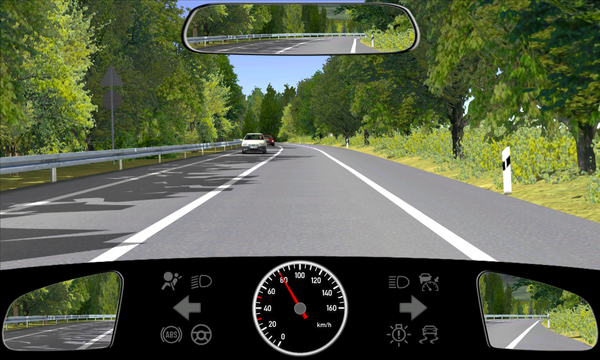
What must you be aware of here?
It is not permitted to stop to the left of the boundary line of the carriageway
Slower moving vehicles must use the hard shoulder if possible
Driving across the boundary line of the carriageway is prohibited at all times
Here is Our AI Assistant's Explanation
Your choices 1 and 2 are correct because this marking is the carriageway boundary line (the solid white edge line). It separates the normal lane from the hard shoulder (emergency lane).
Stopping or parking is not allowed on the carriageway to the left of this boundary line; if you need to stop (e.g., breakdown), you should get onto the hard shoulder instead. The hard shoulder is there to keep the driving lane clear and avoid rear-end collisions.
Also, very slow-moving vehicles should use the hard shoulder if it is permitted and possible in order not to obstruct faster traffic. The idea is “keep traffic flowing” and avoid dangerous speed differences.
Answer 3 is not correct because crossing the boundary line is not “prohibited at all times.” You may cross it when it’s necessary and allowed by the situation, for example to enter or leave the hard shoulder in an emergency (or when directed by police/traffic management). The key rule is: don’t drive on the hard shoulder as a normal lane, and don’t stop on the carriageway—use the hard shoulder when needed.